
Our instructors teach a variety of core UPRT courses and enhancements designed to significantly increase aircraft handling skills and safety in your operation.
What our Customers Say About APS
We train the world to a higher standard of Upset Prevention & Recovery Training, from private aircraft owners and acrobatic pilots to corporate, military, and airline aviators. Here is what our customers have to say about the quality, value, and experience they receive at APS.

Testimonials
Filter by Sector
UPRT Skill Sets Critical to Pilots of All Experience Levels
Recurrent Upset Prevention and Recovery Training (UPRT) refreshes and reinforces initial training, keeping pilot skills current and …
Recurrent Upset Training Prepares Pilots for the Unexpected
Recurrent Upset Prevention and Recovery Training (UPRT) refreshes and reinforces initial training, keeping pilot skills current and …
Upset Training Standardization Benefits Pilots and Crews
Recurrent Upset Prevention and Recovery Training (UPRT) refreshes and reinforces initial training, keeping pilot skills current and …
UPRT — The Tools to Prevent Loss of Control In-flight (LOC-I)
Jonathan Stewart shares his appreciation for gaining new pilot skill sets and tools appropriate for the upset …
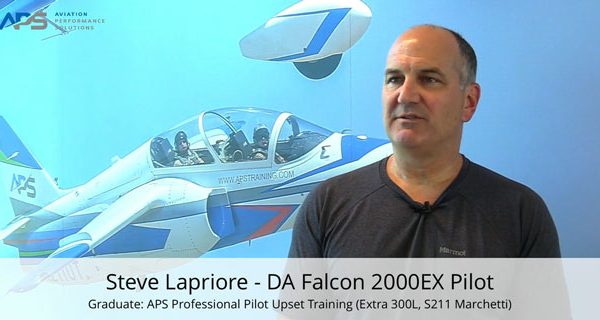
UPRT — The Best Training I’ve Ever Had
Steve Lapriore, DA Falcon 2000EX Pilot and Director of Aviation for a Fortune 100 company, discusses his Upset Prevention and Recovery …
UPRT Is Not Aerobatics
A professional pilot for a Part 191 flight department discusses how he wanted to get more out of the standard recurrent training, but was …
Upset Prevention & Recovery Training (UPRT) – Curriculum Is Key
Upset Prevention and Recovery Training (UPRT) is critical to ensure pilots have the skills they need beyond what’s learning during regular …
Ab Initio UPRT
The benefits of getting Upset Prevention and Recovery Training (UPRT) early in a pilot’s career are …
Overcoming Disorientation
While academic and simulator training are both a critical part of Upset Prevention and Recovery Training (UPRT), the on-aircraft portion of …
Airplane Upset: The Threat You Know
Often times a thing can seem hard or even scary, but gaining a good understanding of it takes the mystery away and makes it manageable. APS …
Recurrent Training and Manual Flying
Dean Nelles, a corporate pilot with 25 years of experience, discusses how incredible UPRT is for pilot skill development. After an initial …
UPRT: Before and After
Standard pilot training has evolved to a high level of excellence of the years, and many pilots feel confident in their skills and ability …
Upset Training Instills Confidence to Overcome Loss of Control
Upset Prevention and Recovery Training (UPRT) arms pilots with the advanced skills needed to prevent or overcome an unexpected airplane …
Increased Pilot Confidence After Upset Training
In this testimonial, Lear 75 pilot Ryan Mills discusses his confidence level in handling an unexpected airplane upset after completing …
The On-Aircraft Upset Training Experience
Watch this pilot’s description of how on-aircraft upset training compares with simulator …
Does Upset Training Make You a Safer Pilot?
Former U.S. Naval Aviator Scott McQuillen flew for 20 years in the Navy before becoming a civilian transport pilot flying Gulfstream …
The Power of On-Aircraft Upset Training
In this brief interview, first-time APS graduate Tyler Pettis, Cessna Citation 525 pilot, discusses his experience at APS. Tyler was …
3 Important Points About APS UPRT – Steve Maynard, Gulfstream G550 & Citation X Captain
In this testimonial, Steve Maynard (Gulfstream G550 & Citation X Captain) explains a few key reasons why he keeps coming back to APS …
UPRT Developed Skill and Confidence Outside the Normal Flight Envelope – Ken Powaski, Challenger 300 and Learjet 45 Captain
As a pilot, you spend most of your time flying in the normal flight envelope, an area in which you have become very comfortable and have …
Standardized Training vs. Exposure – David Garver, King Air 350 Captain
Although there are specific industry guidelines and best practices that should be incorporated into all Upset Prevention & Recovery …
Resiliency of APS Upset Prevention & Recovery Training (UPRT) – Robert Deal, Challenger 300 Capt.
One of the important aspects of Upset Prevention & Recovery Training (UPRT) is the resiliency of the training itself. Like any skill …
US Army Jet Upset Training – Citation / Gulfstream
The US Army Jet Upset Training program at APS is ideally suited for Citation and Gulfstream jet pilots looking for …
APS S211 Jet Upset Recovery Training – Walt Foley G550 Captain
Gulfstream G550 upset recovery training is APS’ specialty, providing the industry’s most comprehensive solutions to …
APS S211 Jet Upset Recovery Training – Shawn Barker Challenger 605 Captain
Integrated Jet Upset Recovery training is APS’ specialty, providing the industry’s most comprehensive solutions to …
APS S211 Jet Upset Recovery Training – Tom Tayler, Challenger 605 Captain
In this video testimonial, Challenger 605 captain Tom Taylor discusses how upset prevention and recovery skills learned in the …
Skill Transferability in Upset Prevention & Recovery Training
In order to truly enhance safety and mitigate risk, we know that effective Upset Prevention & Recovery Training (UPRT) must …
Do Experienced Pilots Learn from UPRT? – Chance Neel – Challenger 605 Captain
Upset Prevention & Recovery Training (UPRT) mitigates the risk of Loss of Control In-flight, aviation’s number one cause of …
Mountain Man Marty Meierotto on APS Upset Training
Marty Meierotto, Kodiak Quest / Super Cub Pilot, graduated from APS’ Professional Pilot UPRT course and also completed the …
APS Gulfstream 450/550 Jet Upset Recovery Training
Kevin DeSha, a Gulfstream 450/550 pilot with over 35 years experience, discusses APS’ Professional Jet Pilot Upset Recovery Training …
APS Citation Ultra/Encore Jet Upset Training
Lindsey Davis, A Citation Ultra/Encore pilot with additional military flight experience, discusses the concept of skill transfer in this …
APS Citation 560 Series Jet Pilot Upset Training
Kellon Moore, A Citation Jet and King Air pilot, discusses his experience with APS’ Professional Jet Pilot Upset Training Program …
Gulfstream G450/550 Pilot Upset Recovery Training UPRT
Take a few moments to listen to Larry Smith, a 10,000 hour US Navy, Global and Gulfstream pilot, comment on his experience with APS in …
Private Phenom 100 Pilot Reviews APS Upset Recovery Training
Hans Barbachano is an Embraer Phenom 100 Pilot Owner who flies privately for himself. As a pre-requisite for his APS A-4 Jet …
Corporate Pilot Evaluates APS Texas Upset Recovery Training
Ken Strilesky, a professional pilot for 40 years with a flight time of more than 20,000 hours, participated in the Aviation Performance …
Corporate Jet Pilot Reviews APS Europe Upset Recovery Course
Julio Garcia, a Corporate Pilot for TAG Aviation-Spain, is presently an Instructor on the Challenger 300 and has more than 5,900 total …
Gulfstream 550/450 Pilot Assesses APS Jet Upset Training
Josh Smith, a Gulfstream 550 and 450 pilot with a large corporate flight department, provides comprehensive feedback on his evaluation of …
Army National Guard Upset Recovery Training: US Army
APS was honored to provide upset prevention and upset recovery training to Dane Dougherty of the US Army National Guard. Dane is a 5,000 …
Upset Training – Real Life Save: Dave Newland
Dave is a 17,000 hour professional jet pilot currently flying Global and Challenger Bombardier business jets. When Dave came back to …
Upset Training Save: Michael Smith-Wheelock
The primary reason Aviation Performance Solutions (APS) has dedicated two decades of expertise into the development of life-saving upset …
Citation UC-35 Pilot: Transfer of Skill and Lives Saved
Please take a few minutes to listen to Dwight Greenlund, 27-year US Army veteran and Fixed Wing Branch Chief at the Directorate for …
APS Upset Recovery Training for Corporate Pilots in Canada
Rob McDicken, a Corporate Pilot with approximately 11,000 flight hours, currently flies a Citation 560 in Canada. Rob recently received his …
CAE Oxford Aviation Cadet Reviews APS Upset Recovery Course
James Tait, a British Airways Professional Pilot in Training, recently received his Professional Pilot Upset Recovery Training at …
Corporate Learjet Pilot Evaluates APS Upset Recovery Program
As a Lear 45 Pilot, Derek flies currently for a Fortune 500 Company and has in excess of 9,000 flight hours. He recently received …
APS A-4 Jet Upset Prevention & Recovery Training Evaluation
After graduating from his Jet Pilot Integrated Upset Prevention and Recovery Training at the Aviation Performance Solutions (APS) facility …
Learjet Corporate Pilot on APS Texas Upset Recovery Training
Matthew Martinez, a former Airline Pilot now flying a Learjet for the Cimarex Corporation, has in excess of 5,000 hours total flying time. …
ATP Pilot Evaluates APS Texas Upset Recovery Training
Michele McVenes is a King Air 350 Pilot with 5,500 hours of total flight time. After finishing her on-aircraft Upset Recovery Training at …
Corporate Pilot on Leading Edge Jet Upset Training at APS
Joe Moske, a former airline pilot, now flying the Challenger 300 for FedEx Corporate Aviation, just received his Integrated Full Solution: …
Corporate Jet Pilot Evaluates APS Upset Recovery Training
Travis Kuntz is a 5,000-hour Corporate Pilot and presently a Captain on the Falcon 20 & Lear 45. He received his Integrated Full …
Airline Chief Pilot Evaluates APS Jet Upset Instructor Program
Johnny Woods is the Chief Pilot for South African Airways. In his 40 years as a professional airline pilot, Johnny accumulated 18,900 …

Global Express Pilot Reviews APS Jet Upset Recovery Training
Brett Betz, a 14,000-hour Corporate Jet Pilot now flying the Global Express 6000 for Jet Aviation Flight Services, recently received his …
Dash-7 Pilot on APS Enhanced Emergency Maneuver Training
Cory Rudd is an experienced U.S. Army aviator who flew many different rotary and fixed wing aircraft. Presently flying the de Havilland …
Global Pilot Evaluates APS Bombardier Leading Edge Program
John Wallace, a former US Airways pilot with more than 12,000 flight hours, is now flying a Global 6000 for Jet Aviation Flight Services. …
Global Express Pilot Upset Recovery Training
A Global Express corporate pilot crew, Paul Davis and Steven Cox, attended the APS Upset Recovery and Prevention Training program in Mesa …
Learjet Bombardier Upset Recovery Training by APS
Learjet corporate pilot, Tim Ganse, comments on his upset prevention and recovery training at APS training in Arizona through the …
Corporate Pilot Feedback – Bombardier Leading Edge
Capt. Anthony (Tony) Lezcano with Caselton Investments participated in the APS in-flight upset recovery training program uniquely designed …
US Army RC-12 Upset Recovery Video
Captain Mike Weipert with the US Army leaves a video testimonial on his upset recovery training experience at APS in Arizona USA …
APS Europe – Bombardier Evaluation by Kerry Swanson
In February 2013, Aviation Performance Solutions (APS) opened its first European location at Seppe Airport in the Netherlands. Please …
APS Europe 2013 Upset Recovery Evaluation by Bombardier
In February 2013, Aviation Performance Solutions (APS) opened it’s first European location at Seppe Airport in the Netherlands. Please …
APS Upset Recovery Training for FedEx Corporate Pilot
As a participant of the Bombardier Leading Edge program with Aviation Performance Solutions (APS), Sam Kilgore shares his experiences from …
Global Upset Prevention and Recovery Training
With 10,000 Hours of flight time and 8 type ratings, currently flying the Global and Learjet, Shawn participated in the APS Jet Upset …
Fortune 500 Upset Recovery Training: Learjet
Shawn is a Learjet / Global corporate pilot for a Memphis-based Fortune 500 company. With his upset training entitlement with the …
CAE Oxford Aviation Academy Upset Recovery Training
Greg Lyons is a 1200-hour flight instructor at the CAE Oxford Aviation Academy in Mesa, Arizona. CAE puts safety first and has invested in …
Global Pilot from Russia on Upset Recovery Training
Bobak (Bob) Yazdani, a Global pilot in Russia, relays his observations and lessons learned from his experiences at Aviation Performance …
Upset Recovery Training for Challenger 300 Pilot
Anthony Doud comments on his upset recovery training at Aviation Performance Solutions (APS) with insight into where this specialized …
Stick & Rudder vs. Technology: Upset Recovery Training
Jeff Wofford, a Learjet 60 and 31 Chief Pilot, attended the Aviation Performance Solutions (APS) Upset Preventing and Upset Recovery …
Part 91 Jet Upset Recovery Training
Kevin is a Part 91 Learjet 60 operator that recently attended APS Upset Recovery and Upset Prevention Training in Mesa, Arizona courtesy of …
Airline Chief Standards Pilot on APS Upset Instructor Course
Sandy Bayne is the Chief Standards Pilot for South African Airways. As an A340 Captain and after flying for 30 years as a professional …
Senior Airline Captain Evaluates Jet Upset Instructor Course
Johann Du Plessis is a senior Captain with South African Airways flying the Airbus A330/340. As a professional pilot for 40 years, Captain …
Airbus Instructor Pilot Assesses APS Train-the-Trainer Course
In addition to being an airline Pilot Instructor on the Airbus A340, Bradley Bennetts also has significant all-attitude environment …
Private Pilot’s Evaluation of APS Upset Recovery Training
As a 2,800-hour Private Pilot, Butch flies several different Cessna aircraft. In order to enhance his personal skill level and to become a …
100-Hour Private Pilot Evaluates APS Upset Recovery Training
Guy Stovall, a 100-Hour Private Pilot from Houston, chose Aviation Performance Solutions (APS) as his on-aircraft Upset Recovery Training …
National Guard Evaluation of APS Upset Recovery Training
George Munson, a 2,000-hour U.S. Army National Guard pilot, evaluates his on-aircraft Professional Pilot Upset Recover Training (PPURT) …
APS Texas Upset Recovery Training for Corporate Pilots
In May 2013, Aviation Performance Solutions (APS) expanded it’s safety training services to a new location in Dallas, Texas USA. Please …
Tailored APS Upset Recovery Training – It Fits!
In June 2013, Kirk Eide, a Lear 45 Corporate Pilot with more than 8,000 flight hours, participated in the Aviation Performance Solutions …
Learjet Bombardier Upset Recovery Training by APS
As a professional pilot for more than 30 years, Derreck Walters, currently flying the Lear 60, participated in the Aviation Performance …
Evaluation of APS Upset Recovery Training by U.S. Army Pilot
Scott Kinney, a U. S. Army C-12 Pilot, participated in the Upset Recovery Training program offered by Aviation Performance Solutions (APS). …
CAE Oxford Upset Recovery Training (in Dutch)
This testimonial is in Dutch. Justin Charbon is een student aan CAE Oxford Aviation Academy. Om de veiligheid van haar studenten, docenten …
Video – European Upset Recovery for Bombardier and Learjet
The European office Aviation Performance Solutions (APS) is located at the Seppe Airport, The Netherlands. APS Europe provides a variety of …