

DOES UPRT ACTUALLY WORK?
Explore the evidence for UPRT effectiveness, from pilot performance and skill transfer to human factors, physiological response, operational data, and LOC-I risk mitigation.
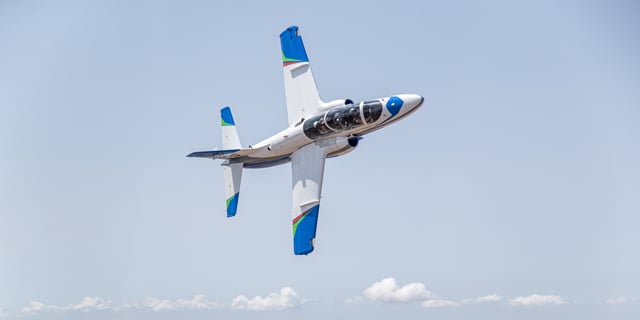
With many approaches to UPRT (and accidents prevented impossible to count), do we know that training is actually effective at training pilots for real-world unexpected events and reducing the risk of Loss of Control In-flight?
Yes. A substantial and growing body of evidence supports the effectiveness of properly designed Upset Prevention and Recovery Training (UPRT).
Yes. A substantial and growing body of evidence supports the effectiveness of properly designed Upset Prevention and Recovery Training (UPRT).

That evidence includes measured improvements in pilot performance, performance in novel and unexpected upset scenarios, real-world airline operational data, physiological research during actual training flights, and independent human-factors research on surprise and startle.
A couple of examples include: A three-year assessment involving 67 United Aviate Academy cadets found that successful recovery from a novel, never-demonstrated upset increased from 16.4% before an integrated APS UPRT program to 86.6% after training. [1] Delta Air Lines reported a 50% reduction in identified precursor airplane-upset conditions in Flight Operational Quality Assurance (FOQA) data spanning approximately 5 million flights over five years following implementation and active management of a comprehensive UPRT-centered loss-of-control risk program. [2]
UPRT is also embedded in the global aviation-safety framework. ICAO has established international standards and guidance for UPRT; the FAA requires extended-envelope and upset-recovery training for U.S. Part 121 airline pilots and recommends UPRT principles more broadly; and EASA requires UPRT at defined stages of professional-pilot training. [3] [4] [5] These measures respond to Loss of Control In-flight (LOC-I), which ICAO identified as the leading cause of fatalities in commercial aviation between 2001 and 2011. [3]
That does not mean UPRT eliminates all LOC-I risk, that every program produces equivalent results, or that research can calculate exactly how many accidents or fatalities UPRT has prevented. It means something defensible: the capabilities UPRT is designed to develop are trainable; improvements in those capabilities have been measured; pilots can apply trained principles in novel and unexpected scenarios; and relevant operational safety indicators have improved following implementation of comprehensive UPRT programs.
The question, then, is no longer simply whether upset training "works". The more useful questions are: What kind of UPRT has been shown to be effective, how is its effectiveness measured, and what does the available evidence actually establish?
How Can We Know Whether UPRT Works?
Measuring the effectiveness of UPRT presents an unusual challenge: the ultimate outcome we care about is an accident that does not happen.
Direct proof of UPRT effectiveness is difficult for three important reasons:
-
-
-
Fatal LOC-I events are relatively rare and cannot ethically be reproduced for research. We cannot expose comparable groups of trained and untrained pilots to equivalent, life-threatening loss-of-control events and compare the outcomes.
-
Successful prevention is largely invisible. If a pilot recognizes a developing upset earlier, avoids an inappropriate response, or recovers before the event progresses to loss of control, we cannot know with certainty what would have happened without the training. The accident potentially prevented never becomes a data point.
-
There is a stigma associated with experiencing an upset. The idea that a highly proficient pilot should never encounter an upset or be at risk for LOC-I can make pilots and operators reluctant to discuss these events publicly. APS has heard directly from highly experienced, accomplished pilots who report using their UPRT during real-world upsets or near-upsets, yet some have been unable to share those experiences publicly because of concern about how the event might reflect on the pilot or their organization. Their accounts cannot prove what would have happened without UPRT, but their experiences underscore an important point: encountering an upset and lacking the skill to manage one are not the same thing.
-
-
For all of these reasons, there is no single statistic that can tell us how many accidents UPRT has prevented or lives it has saved. Nor should the effectiveness of UPRT depend on finding such a statistic. Instead, the evidence has to be examined cumulatively.
The Evidence Chain
A credible evaluation of UPRT should answer several different questions:
-
-
-
Is LOC-I a meaningful aviation-safety threat, and does it involve capabilities that training can influence?
-
Are the relevant capabilities trainable? These capabilities include recognition, prevention, decision-making, manual handling, energy management, and recovery among others.
-
Can pilots apply what they learn beyond a rehearsed maneuver or expected exercise?
-
Does the training hold up when an event is unexpected and surprise, startle, workload, or physiological response become relevant?
-
Can relevant change be observed in line operations after implementation of an integrated UPRT program?
-
Are UPRT principles consistent with accident science, aerodynamic science, human-factors research, and international regulatory guidance?
-
Does the program avoid known training risks, including negative transfer from incorrect techniques, inappropriate use of simulation, or procedures not aligned with aircraft-specific manufacturer guidance?
-
-
No individual study answers every question. But when independent forms of evidence measure different links in the same safety chain and consistently point in the same direction, the cumulative case becomes substantially stronger.
What UPRT is designed to do
An airplane upset is an undesired aircraft state in which the airplane is unintentionally diverging from the flight path or state the pilot intends. It may involve changes in pitch, bank, airspeed, energy state, angle of attack, or flight path. Modern UPRT is not simply “unusual-attitude training,” nor is it aerobatic flying. It is a prevention-first training discipline designed to develop the knowledge, skills, awareness, and responses pilots need to prevent an upset when possible, recognize and arrest a developing upset, and recover safely when prevention is no longer possible. UPRT develops a pilot’s ability to:
-
-
-
Recognize threats and conditions that can lead to an upset.
-
Detect and correct divergence early, before an undesired aircraft state progresses further.
-
Maintain awareness of aircraft state and energy, including flight path, airspeed, attitude, angle of attack, and available energy.
-
Apply appropriate, measured control inputs based on what the aircraft is actually doing.
-
Recover from an upset when prevention is no longer possible, using principles that can be applied across unfamiliar and unexpected situations rather than relying solely on rehearsed maneuvers.
-
Avoid inappropriate, instinctive, or excessive responses that can aggravate an upset or impede recovery.
-
Manage surprise, startle, stress, disorientation, and elevated workload sufficiently to recognize the situation and take purposeful action.
-
-
The distinction between preventing an initiating event and preventing loss of control is important. Not every condition that can produce an airplane upset originates with the pilot, and not every initiating event can be anticipated or avoided. Weather, system or automation behavior, misleading information, external disturbances, and other unexpected conditions can place even a proficient pilot in an undesired aircraft state.
In those circumstances, prevention has not necessarily failed. Recognizing the developing condition, interrupting the sequence, and preventing an upset from progressing to Loss of Control In-flight is itself prevention. That is why UPRT addresses the entire continuum: avoid the upset when possible, recognize and arrest it as it develops, and recover when necessary. The FAA’s UPRT guidance emphasizes prevention, early recognition of flight-path divergence, manual handling, energy management, scenario-based training, crew resource management, instructor qualification, and careful management of simulator limitations.
EASA defines UPRT as theoretical and flying training intended to give flight crews the competencies needed to prevent airplane upsets and recover from them. [5]
ICAO and the major aircraft manufacturers similarly frame UPRT around recognizing, avoiding, and recovering from undesired airplane states—not merely performing a maneuver after a defined pitch or bank limit has been exceeded. [6]
Does upset training actually AcomPlish theSE goals?
Yes, when it is comprehensive, technically correct, and designed for transfer to real flying. The evidence is strongest when viewed as a whole. Different studies measure different parts of the same safety problem:
-
-
-
Does training improve pilot performance in unexpected upset scenarios?
-
Following implementation, can changes be observed in operational precursors associated with airplane upset and loss of control?
-
Can UPRT expose pilots to meaningful startle, surprise, stress, and workload, and can pilots improve their ability to function under those human-factors effects?
-
Do regulators, aircraft manufacturers, and safety specialists consider UPRT a meaningful defense against loss of control?
-
Does training measurably improve pilot performance when the upset is unexpected rather than rehearsed?
-
Do trained skills transfer beyond the specific exercises and environment in which they were learned?
-
Are the knowledge, skills, and responses developed through UPRT consistent with what accident science, human-factors research, and aerodynamic science tell us about LOC-I? Across those questions, the findings point in the same direction.
-
-
Demonstrated Recovery Performance
At United Aviate Academy, pilots were assessed before and after integrated APS UPRT using an unexpected upset-recovery scenario. The specific upset had not previously been demonstrated to them, and the pilots did not know in advance what upset they would encounter. Reported successful recovery performance increased from 16.4% before training to 86.6% after training. [1] That is an absolute improvement of 70.2 percentage points and a 427% relative increase from the pre-training baseline. Importantly, the assessment did not simply ask pilots to repeat a recovery maneuver they had already been shown. It measured whether they could recognize an unexpected aircraft state and successfully apply what they had learned. The appropriate conclusion is specific and strong: In that study population and assessment environment, pilots demonstrated substantially better performance in recovering from an unexpected upset after completing integrated APS UPRT. It would be inappropriate to translate a 427% improvement in successful recovery performance into a 427% reduction in accidents or LOC-I risk; the study did not measure either outcome. What it did demonstrate was a large measured improvement in a pilot capability UPRT is specifically intended to develop.
Independent research: surprise changes performance
An upset is dangerous not only because it may require a recovery procedure. It is dangerous because the event may be unexpected, time-compressed, disorienting, and cognitively disruptive. Independent airline-pilot research has shown why that distinction matters. In a simulator study, pilots had significantly more difficulty adhering to a stall-recovery procedure when the stall occurred unexpectedly than when they anticipated it. Subjective and physiological measures confirmed that the manipulation primarily increased surprise and, to a lesser extent, startle. [7] That finding is not an argument against UPRT. It explains why UPRT must involve more than predictable maneuver rehearsal. ICAO’s evidence-based training guidance recommends varying scenario types, timing, and occurrences so pilots do not become overly familiar with repetitions of the same scenario. Scenario-based training is intended to develop capabilities for both predictable and unforeseen situations, rather than to turn a maneuver into a memorized, anticipated exercise. [8] The United Aviate assessment is relevant for the same reason: it used a novel, never-demonstrated upset event. The pilots were not asked simply to repeat an exercise they had already been shown. Their improvement therefore provides evidence of application beyond a rehearsed sequence.
Airline Operational Evidence
Evidence of improved performance in a training assessment answers one important question. A different question is whether a measurable change can also be seen in actual flight operations. Delta Air Lines reported a 50% reduction in precursor airplane-upset conditions following implementation and active management of its UPRT program. The analysis drew on Flight Operational Quality Assurance (FOQA) data from approximately five million flights over five years. That result is particularly important because the measured outcome came from line operations—not a classroom survey or a training exercise. Delta used operational flight data to track conditions relevant to the development of airplane upsets across a very large population of flights. The finding also needs to be interpreted in context. Delta's approach incorporated UPRT subject-matter expertise, fleet-specific implementation, FOQA and ASAP trend analysis, learning from industry accidents and incidents, and, in some cases, aircraft-system enhancements such as head-up displays. Some identified precursors were therefore addressed through multiple interventions. The data does not establish that UPRT alone caused the entire 50% reduction. This was not a randomized experiment isolating training from every other change in the operational system. But that does not diminish what the analysis does show. Aviation safety improvements are often achieved through layered interventions informed by operational data, rather than through one variable operating in isolation. The supported conclusion is therefore: Following implementation and active management of a comprehensive UPRT-centered loss-of-control risk-management program, Delta observed a 50% reduction in identified precursor airplane-upset conditions across approximately five million flights.
Why These Two Findings Matter Together
The United Aviate Academy and Delta Air Lines findings measure different outcomes in very different environments. United measures pilot capability of RECOVERY: Can pilots perform better when confronted with an unexpected upset after receiving integrated UPRT? Delta measures operational indicators focused on PREVENTION: Following implementation of a comprehensive UPRT-centered risk-management program, can a meaningful change be observed in conditions associated with airplane-upset risk during actual airline operations? The answer was favorable in both cases. Neither finding, alone or together, establishes exactly how many LOC-I accidents were prevented or lives were saved. But they provide evidence at two important points in the safety chain: measurable improvement in pilot performance and measurable improvement in relevant operational safety indicators.
Real physiological stress in training
One frequent objection is that training cannot replicate the surprise, stress, or fear of an actual upset. No training event can duplicate every feature of every real-world emergency. A line upset may involve weather, low altitude, a system failure, passengers, aircraft damage, incomplete information, operational pressure, or a combination of threats. But the claim that UPRT is physiologically or psychologically “stress free” is contradicted by independent data.
The U.S. Army Aeromedical Research Laboratory partnered with APS to collect physiological data from Army pilots during APS fixed-wing UPRT. Participants completed five flights involving emergency scenarios and varied attitudes while researchers recorded physiological data. The Army found that average heart-rate variability, or HRV, decreased significantly as G-force increased. It also found increasing irregularity in heartbeat patterns as G-load increased. The Army explained that these findings were consistent with increased stress and mental workload during challenging flying conditions. [9] In plain terms: the UPRT environment produced measurable human-performance demands. The study does not claim that UPRT perfectly recreates the physiological profile of every operational upset. It does show that actual training flights can produce objectively measurable stress and workload—the very conditions that make upset events difficult to manage. [9] That matters because the goal of UPRT is not to make surprise disappear. The goal is to help pilots maintain purposeful control when surprise occurs.
Can pilots learn to manage startle and surprise?
Yes. The goal is not immunity from startle; it is to help pilots manage its effects and return to purposeful action after the initial disruption. Startle is an involuntary response to a sudden, unexpected, potentially threatening event. In aviation, it can narrow attention, delay diagnosis, disrupt decision-making, and encourage an immediate but inappropriate control input. Pilots cannot simply decide not to be startled. But training can provide an organized response structure when conscious processing is disrupted:
-
-
-
Recognize the aircraft is diverging from the intended state.
-
Prioritize aircraft control and flight path.
-
Assess energy and attitude using reliable cues.
-
Apply measured, appropriate control inputs.
-
Stabilize the aircraft before diagnosing secondary problems.
-
-
Research summarized by the Flight Safety Foundation indicates that targeted training can help flight crews manage the period of cognitive degradation that follows startling events. The value is not in eliminating the startle response, but in reducing its operational consequences. [10] Additional studies take the question further, examining pilot performance after training when surprise, startle, and stress are introduced, including situations pilots have not specifically rehearsed.
UPRT applies that principle to upset prevention and recovery. Pilots repeatedly practice recognizing unfamiliar aircraft states, responding to changing energy and attitude, and prioritizing control under time pressure. As the scenario becomes more challenging, pilots practice maintaining an organized response despite increasing workload, surprise, and pressure. A pilot may still feel surprise. The difference is that training can make the next action more organized.
Read More About How UPRT Helps Pilots Manage Human Factors Such as Startle, Surprise and Stress →
UPRT strengthens manual handling and airmanship
UPRT is not a substitute for instrument proficiency, recurrent training, type-specific training, sound decision-making, or standard operating procedures. It reinforces the manual-handling and awareness skills that make those other defenses more effective. At its foundation, upset prevention requires a pilot to notice that the airplane is no longer doing what was intended. That requires:
-
-
-
Active monitoring of flight path, energy state, and aircraft response.
-
Accurate instrument cross-check.
-
Awareness of pitch, bank, airspeed, thrust, configuration, and angle of attack.
-
Understanding of how control inputs affect the aircraft in different parts of the operating envelope.
-
Measured inputs rather than abrupt, excessive, or reactionary control movements.
-
Timely intervention before a small divergence becomes a developed upset. ICAO’s manufacturer-supported training aid states that active monitoring of the environment, aircraft energy state, and flight-path trajectory is a critical defense against undesired airplane states and a strong countermeasure against startle. It also emphasizes that pilots need practical knowledge of aircraft performance and handling characteristics throughout the operational envelope. [6] That is why high-quality UPRT refreshes more than recovery technique. It reinforces airmanship:
-
Manual handling: Coordinated pitch, roll, yaw, thrust, and configuration management. ● Energy management: Understanding how altitude, airspeed, and thrust can be traded to control trajectory.
-
Flight-path awareness: Knowing what the airplane is doing, what it should be doing, and whether it is diverging.
-
Instrument discipline: Returning to reliable references when visual, vestibular, or workload cues are misleading.
-
Judgment: Intervening early rather than waiting for a deviation to become dramatic.
-
Crew awareness: Communicating expectations, deviations, and required interventions. These skills are valuable far beyond a fully developed upset. They support stable approaches, weather encounters, automation anomalies, unusual instrument conditions, wake turbulence, high-altitude operations, and any event in which the aircraft’s actual state diverges from the crew’s expectations.
-
-
UPRT supports a prevention-focused safety culture
Safety culture is not created by one course. It is built through leadership, reporting, standard operating procedures, instructor standardization, training quality, operational learning, and the way an organization responds to risk. UPRT can reinforce that culture by giving pilots, instructors, safety teams, and operators a shared vocabulary for discussing loss-of-control risk:
-
-
-
Undesired airplane states
-
Flight-path divergence
-
Energy awareness
-
Active monitoring
-
Startle and surprise
-
Early intervention
-
Manual handling
-
Threat and error management
-
Appropriate recovery priorities
-
-
That shared language matters. A pilot who understands upset precursors is better equipped to identify them early. An instructor with a structured UPRT framework can teach prevention rather than merely correct an error after it becomes severe. A safety team can connect FOQA, ASAP, training, and line-operations data to specific operational threats. The result is not merely a better recovery maneuver. It is a more prevention-oriented way of thinking about aircraft control.
What makes UPRT effective?
Not all UPRT provides the same opportunity for risk mitigation. The Four-Level UPRT Architecture shows different platforms that providers use for UPRT, and how training can progress from foundational knowledge and exposure to comprehensive, integrated UPRT that prepares pilots to prevent, recognize, and recover from unexpected airplane upsets. Each level adds capabilities and training experiences that address more of the LOC-I threat. The highest level integrates the complementary strengths of academics, on-aircraft training, and advanced simulation to provide the most comprehensive opportunity for LOC-I risk mitigation.
A Closer look at the 4-Level UPRT Delivery Architecture
The Four-Level UPRT Delivery Architecture provides a framework for comparing how different UPRT architectures contribute to LOC-I risk mitigation. Each level represents a different ceiling capability—the maximum risk-mitigation potential that architecture can structurally deliver when implemented at the highest level of effectiveness.
If you would like to understand more about UPRT delivery architecture and how each level mitigates risk, click below to download a full summary including a provider evaluation checklist.
Relative Operational Risk-Mitigation Potential by Architecture
Calibrated to Fixed-Wing Turbine-Powered Airplanes, Including Operations Above FL250
Values Rounded to Nearest 5% to Reflect Relative Operational Calibration Rather than Statistical Precision
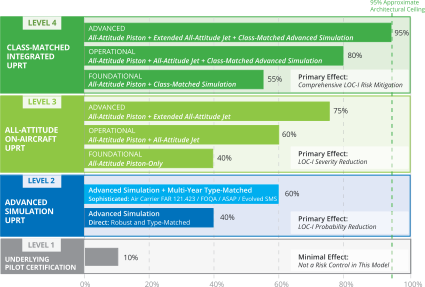
Foundational: Core Concepts & Skills | Operational: Foundational + Complex Jet Competencies | Advanced: Operational + Complex Jet Competencies + High Altitude Handling
DELIVERY EXCELLENCE DETERMINES UPRT EFFECTIVENESS
Selecting the right UPRT architecture establishes the potential for LOC-I risk mitigation. Realizing that potential depends on how well the training is designed, integrated, and delivered.
The Every Pilot In Control Solution Standard™ (EPIC-S²™) defines the critical factors for UPRT delivery excellence—from elite instructor qualification and integrated training systems to training intensity, proven best practices, purpose-built platforms, and lifecycle training architecture.
At every level of UPRT, excellence in these factors determines how closely training can approach the risk-mitigation potential of the architecture. You can explore the elements of EPIC-S2 below.
Every Pilot In Control Solution Standard™
The Every Pilot In Control Solution Standard™ (EPIC-S2™) establishes a benchmark for UPRT, filling a critical gap by providing a unified, industry-leading standard designed to maximize safety and ensure every pilot is equipped with the highest level of upset prevention and recovery training.
Elite instructors
Train with the Best
Global aviation authorities, including ICAO and the FAA, agree that a qualified instructor is the most critical element of effective UPRT. Our UPRT instructors bring thousands of hours of specialized experience as fighter pilots, test pilots, aerobatic pilots, commercial pilots, and Master CFIs. Beyond elite credentials, each instructor completes APS’s rigorous, standardized UPRT qualification program to ensure precise, proven training methods while avoiding negative training. With more Master CFIs on staff than any other flight training organization worldwide, APS instructors deliver excellence in UPRT.
Integrated Program
Academics, On-aircraft, Simulator & VR Training
The most effective, safe, and long-lasting upset training is accomplished through an integrated combination of industry-approved loss of control academics, proper use of all-attitude piston and jet airplanes, and expertly integrated advanced flight simulation training devices when appropriate. The tactical integration of these three training mediums provides an engaging learning environment required to ingrain powerful and resilient UPRT skills.
Training Intensity
Multiple Flights Over Multiple Days
In an unexpected airplane upset, accurate decision-making, resilience and measured reaction times are critical. Behavioral studies show practicing a skill multiple times intensely over multiple days develops deeper learning, faster decision-making and precise reaction time with accurate control response. Our minimum profile of four flights over three days builds the vital structured response, decision making, and reaction times you need to safely recover from a wide diversity of airplane upset conditions and provides a level of instruction that will allow those skills to remain second-nature should an event occur months or even years after training.
Best Practices Compliant
FAA/EASA/ICAO
Addressing regulatory-defined training content is a bare minimum and not optional. Some UPRT providers may skip what they think doesn’t matter, which is unacceptable. Over the past three decades, APS has worked closely with regulatory agencies and oversight organizations such as ICAO, EASA and the FAA to help them establish guidance and best practices for safe and effective Upset Prevention and Recovery Training. UPRT training at APS is in strict compliance with these guidelines, adhering to the strictest safety standards and proven training practices, and, most importantly, also includes critical features these organizations have missed.
Purpose-Built Platforms
Safe, Certified, All-Attitude Capable
On-aircraft training in an all-altitude aerobatic-capable airplane is essential for pilots to develop advanced manual handling skills, effectively develop a three-dimensional mental model, and overcome critical human factors that often derail successful upset prevention or recovery in a real world crisis event. Together with expert instructors following a comprehensive training curriculum, safe all-attitude aircraft that are fully recoverable from inadvertent spins assure the delivery of a complete program while guaranteeing a margin of safety essential to safe and effective UPRT.
Initial and Recurrent Training
Multi-day Initial with 1-Day Recurrent
The intensity of the initial APS UPRT program establishes a long-term, renewable knowledge and skill foundation that can be completely refreshed every year in a short, one-day recurrent course. The APS Every Pilot in Control Solution Standard includes the ability for pilots to take control of the design, content, and structure of their annual recurrent training sessions. In addition to the single day recurrent, pilots and flight departments can optionally choose from comprehensive menu of enhancements they feel best fits their personal and operational needs.
What UPRT cannot do
Credible UPRT makes no promise of invulnerability. It cannot:
-
-
-
Guarantee recovery from every upset.
-
Make every unexpected event feel routine.
-
Eliminate the effects of weather, altitude, aircraft damage, systems failures, fatigue, or workload.
-
Replace aircraft-specific procedures, manufacturer guidance, SOPs, CRM, automation management, instrument proficiency, or sound preflight decision-making.
-
Turn a pilot into an aerobatic pilot—or require that outcome.
-
Justify control techniques that are inappropriate for the operational aircraft.
-
-
Some events may be unrecoverable because the aircraft is too low, too damaged, outside its usable envelope, or affected by conditions beyond the pilot’s ability to overcome. Training cannot change those physical limits. What training can change is the probability that a pilot recognizes a developing threat in time, avoids a counterproductive response, applies appropriate control inputs, and preserves the margin needed for recovery. That is a meaningful safety difference.
Does UPRT save lives?
UPRT is designed to save lives by reducing the likelihood that an airplane upset develops into Loss of Control In-flight—and pilots trained by APS have reported using their UPRT skills during actual in-flight upsets and near-upsets. Some of those pilots have shared their experiences publicly; APS is aware of numerous additional events that the pilots or organizations involved have not permitted to be publicly discussed. Those real-world accounts are important, but they cannot tell us what would have happened without the training. No responsible organization should claim it can assign an exact number of lives saved to a single course. Accidents are rare, often involve multiple causes, and are not suitable for the kind of controlled experiment that would isolate one intervention from every other operational variable. But the inability to count precisely how many accidents or fatalities UPRT has prevented does not mean there is no evidence. The relevant question is whether UPRT improves the human and technical capabilities that influence the outcome of an upset event. The answer is yes:
-
-
-
United Aviate Academy pilots demonstrated substantially better performance in a surprise upset-recovery assessment after integrated APS UPRT.
-
Delta reported a 50% reduction in precursor upset conditions across approximately 5 million flights after implementing and managing its UPRT program as part of its broader loss-of-control risk strategy. [2]
-
U.S. Army physiological research found measurable stress and workload changes in Army pilots during actual APS UPRT flights, demonstrating that training can engage real human-performance demands. [9]
-
Human-factors research supports targeted training to help mitigate the performance disruption associated with startle and surprise. [7] [10]
-
FAA, EASA, ICAO, and major aircraft manufacturers recognize UPRT as an important component of loss-of-control prevention and recovery. [3] [4] [5] [6] The evidence does not depend on a single statistic, provider claim, or testimonial. It converges across operational data, demonstrated pilot performance, physiology, human factors, and global safety guidance.
-
-
That convergence supports a clear conclusion:
Well-designed UPRT improves a pilot’s ability to prevent, recognize, and recover from loss-of-control threats—and gives pilots a better chance to achieve a safe outcome when the unexpected happens.
The most important value of UPRT may never appear in an accident report. It may be the unstable energy state identified before it becomes a stall. The unexpected roll corrected before it becomes an upset. The startled pilot who pauses, recognizes the aircraft state, and makes the right input instead of the instinctive one. Those are the safety outcomes that matter: not dramatic recoveries after control is lost, but the moments before loss of control becomes inevitable. Frequently asked questions Can a simulator teach upset recovery? A simulator can be highly effective for many UPRT objectives, including aircraft-specific procedures, system failures, crew coordination, instrument conditions, scenario-based decision-making, and some recovery exercises. Its use must remain within the simulator’s validated capabilities and align with manufacturer guidance.
Do UPRT skills transfer to other aircraft? Core skills such as recognizing divergence, monitoring flight path, managing energy, using reliable instrument references, and avoiding excessive inputs can transfer. Exact recovery procedures, control responses, limitations, automation behavior, and handling qualities remain aircraft-specific.
Can UPRT reproduce real operational stress? Not perfectly. But the U.S. Army’s physiological monitoring during actual APS UPRT flights found significant HRV changes associated with increasing G-load, stress, and workload. Training can therefore create measurable human-performance demands even though it cannot reproduce every operational variable.
Does UPRT improve manual flying? UPRT reinforces manual-handling skills most relevant to upset prevention and recovery: flight-path control, energy awareness, instrument cross-check, coordinated inputs, awareness of aircraft response, and timely intervention. It complements—rather than replaces—regular aircraft-specific manual-flight proficiency.
Is all upset training equally effective? No. Training architecture & quality matters. Programs should be prevention-focused, built on correct aerodynamics and manufacturer guidance, delivered by qualified instructors, structured to avoid negative transfer, and designed to develop performance under realistic workload and surprise. Learn More About UPRT Architecture
Is UPRT just aerobatic training? No. Aerobatic training focuses on intentionally performing planned precision maneuvers. An upset recovery is an unplanned, non-precision maneuver. UPRT should focus on preventing, recognizing, and recovering from unintended aircraft-state deviations. It is grounded in aerodynamics, energy management, active monitoring, human factors, and appropriate aircraft-specific recovery methods.
FREQUENTLY ASKED QUESTIONS ABOUT UPRT
Is UPRT Effective?
Yes. The strongest case for UPRT effectiveness comes from the convergence of evidence across multiple independent forms of data. No single study or metric can prove that UPRT prevented a specific accident that never occurred. Instead, the evidence chain examines the question from different directions: controlled pilot-performance assessments, transfer to novel upset scenarios, human-factors and physiological research, operational airline data, and decades of aviation safety research and guidance.
Each measures something different and has different limitations. When independent lines of evidence using different methods and measures consistently point toward improved pilot capability and reduced LOC-I risk, that convergence strengthens the conclusion beyond what any single dataset could establish on its own.
UPRT effectiveness does depend on both the training architecture and the quality of its implementation. Different UPRT architectures have different potential to address LOC-I risk, while factors such as instructor expertise, training integration, intensity, platforms, and recurrent reinforcement influence how much of that potential is realized.
In aggregate, evidence supports a carefully bounded conclusion: properly designed and delivered UPRT works to develop the pilot capabilities necessary to prevent, recognize, and recover from airplane upsets. It does not establish an exact percentage of accidents or fatalities prevented.
Can UPRT prepare pilots for unexpected airplane upsets?
Yes. Evidence indicates that UPRT can develop capabilities that transfer beyond the specific scenarios encountered in training. In one example, an assessment of 67 United Aviate Academy cadets found that successful recovery from a novel upset that had never been demonstrated or practiced during training increased from 16.4% before integrated UPRT to 86.6% afterward.
This is one example within a broader body of evidence. Other studies cited above have examined different aspects of post-training performance—including skill retention, responses to surprise and startle, physiological adaptation, and the ability to apply trained responses under unfamiliar or demanding conditions. Together, these findings support the conclusion that UPRT can prepare pilots to respond more effectively when they encounter an upset they did not expect.
Can pilots be trained to manage startle and surprise?
Training has not been shown to eliminate the involuntary startle response, and that is not its objective. Evidence indicates that appropriate training can help pilots manage the effects of startle and surprise and return more effectively to purposeful action. Effective UPRT develops recognition, aircraft-state awareness, appropriate control responses, and decision-making under workload and time pressure.
Is on-aircraft UPRT necessary?
On-aircraft UPRT provides capabilities that simulation cannot fully reproduce, including real motion, aerodynamic response, physiological exposure, and all-attitude recovery experience. The Four-Level UPRT Delivery Architecture distinguishes the risk-mitigation capabilities of simulation, on-aircraft, and integrated approaches rather than treating all UPRT as equivalent.
Does UPRT Reduce the Risk of Loss of Control In-flight (LOC-I)?
UPRT is a risk-control strategy designed to reduce Loss of Control In-flight (LOC-I) risk by developing the capabilities pilots need to prevent, recognize, and recover from airplane upsets. From a safety risk-management perspective, LOC-I risk can be mitigated by reducing the probability that an upset develops into a loss-of-control event, reducing the severity of an event through effective recovery, or addressing both. Different UPRT architectures provide different levels of capability across these dimensions.
The exact percentage of LOC-I accidents prevented by UPRT cannot be directly observed because prevented accidents are not observable.
That limitation does not mean LOC-I risk reduction cannot be evaluated. The evidence instead converges across measurable indicators including pilot performance and transfer, operational upset-precursor data, human-factors research, and physiological response. This evidence helps evaluate whether training develops the capabilities and affects measurable conditions associated with LOC-I risk. As the body of evidence grows across these independent measures, it further strengthens the evidence base supporting properly designed and delivered UPRT as an effective LOC-I risk-mitigation strategy.
For operators that identify LOC-I as an unacceptable operational risk, UPRT is the training intervention specifically designed to mitigate that risk. Its potential contribution depends on the training architecture selected, while the amount of that potential realized depends on the quality of implementation.
How often should pilots complete UPRT?
UPRT should not be viewed solely as a one-time training event. Initial training establishes capability, while recurrent UPRT reinforces skills and awareness that can degrade over time. The appropriate lifecycle should reflect the pilot, aircraft, mission, operating environment, and organization's LOC-I risk-management strategy.
References
- Upset Prevention Training Producing Big Results at United Aviate. Aviation International News. 2025.
- Operational Data Supports Active UPRT Programs. Aviation International News. 2023.
- Manual on Aeroplane Upset Prevention and Recovery Training (Doc 10011). International Civil Aviation Organization. 2014.
- Advisory Circular 120-111: Upset Prevention and Recovery Training. Federal Aviation Administration. Active guidance.
- What is UPRT?. European Union Aviation Safety Agency. 2023.
- Airplane Upset Prevention and Recovery Training Aid, Revision 3. International Civil Aviation Organization / OEM working groups. Rev. 3.
- The Influence of Surprise on Upset Recovery Performance in Airline Pilots. Landman, A., Groen, E. L., van Paassen, M. M., Bronkhorst, A. W., & Mulder, M.. The International Journal of Aerospace Psychology, 2017.
- Procedures for Air Navigation Services — Training (PANS-TRG, Doc 9868). International Civil Aviation Organization. Competency-based training and surprise elements.
- Monitoring Army Aviators In-Flight: Heart Rate Variability during Extreme Maneuvering. Wilkins, J., & Feltman, K., U.S. Army Aeromedical Research Laboratory. 2024.
- Training for Startle. Flight Safety Foundation. 2017.
Customized UPRT
Optimal risk mitigation
APS's Turnkey UPRT solutions are expertly tailored to your flight operations, reducing LOC-I risk while maximizing safety and efficiency.