

WHAT DOES UPRT COST?
Learn what UPRT costs, what affects pricing, and how to get the most value from your pilot training budget.

Because the term Upset Prevention and Recovery Training (UPRT) describes a variety of training programs with different scopes, there is no single standard price for UPRT, and it is critical to understand what different programs offer and why. The right budget depends on your training objective considering how, where and what you fly.
While regulatory agencies such as the FAA and ICAO have offered some guidance on properly delivered UPRT, the guidance opens the door for a very wide range of possible implementation. UPRT may include some combination of:
- Ground instruction
- Flight simulation
- Virtual or mixed reality
- On-aircraft training in an aerobatic-capable aircraft
- Jet aircraft training
- Initial and recurrent training
What training outcome am I receiving for the total amount I will spend?
A simulator-based course and an integrated program combining academics, on-aircraft training, and advanced simulation may both be described as UPRT, but they are not equivalent products.
For that reason, a meaningful cost comparison starts by determining exactly what is included in the training and how well that training applies to what and how you fly. The most useful way to evaluate UPRT cost is not to ask only, “What is the course price?” but to ask:
“What training outcome am I receiving for the total amount I will spend?”
A well-designed UPRT program should give you more than exposure to unusual attitudes. It should help you understand how upsets develop, recognize the conditions that precede them, manage the startle and decision-making challenges they create, and apply appropriate recovery principles in a realistic training environment. It should ensure the skill sets developed are relevant, long-lasting and resilientent by delivering a data-backed, best practices-compliant and efficient program customized to your flight operation.
Loss of Control In-flight (LOC-I) remains a leading fatal aviation risk. Yet comprehensive UPRT is often treated as optional because it falls outside required recurrent training.
That creates an important distinction:
A sound training budget starts with what is required, but should also account for consequential risks and demonstrated competency gaps.
WHAT DETERMINES THE COST OF UPRT?
Several factors have a significant effect on UPRT pricing:
Training Platform
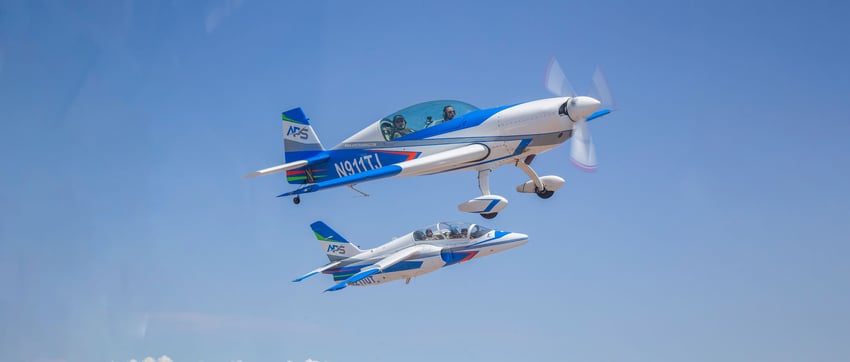
Different training environments provide different capabilities and have different operating costs. The architecture of the UPRT program determines the platforms used, and each component contributes differently to pilot competency and operational reslience. Below, for example, is the possible UPRT architecture for fixed-wing jet pilots flying turbine-powered airplanes:
Relative Operational Risk-Mitigation Potential by Architecture
Calibrated to Fixed-Wing Turbine-Powered Airplanes, Including Operations Above FL250
Values Rounded to Nearest 5% to Reflect Relative Operational Calibration Rather than Statistical Precision
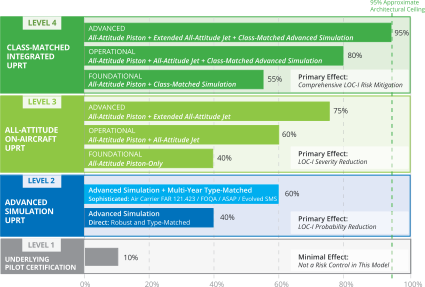
Foundational: Core Concepts & Skills | Operational: Foundational + Complex Jet Competencies | Advanced: Operational + Complex Jet Competencies + High Altitude Handling
As you can see in the chart, each UPRT platform or architecture has a different ceiling capability for mitigating LOC-I. On-aircraft training requires aircraft operating time, fuel, maintenance, specialized instructors, and other flight-related expenses. Jet UPRT introduces substantially higher aircraft operating costs. Simulator training avoids many of those expenses and can provide valuable operational scenario training, but it does not reproduce critical aspects of actual flight.
An integrated program deliberately uses different training environments to capitalize on the competencies and overcome the limitations of each individual platform. This integration results in a full range of pilot skill practice and development.
The seamless delivery of an efficient UPRT program customized to what the pilot flies and their daily operations is the goal. To get an apples to apples comparison of the relative cost of UPRT programs, the first step is simply to determine the architecture being delivered.
Number and Type of Training Events
When comparing UPRT prices, determine exactly how much training is included. The training intensity is important to the long-lasting resilience of the skills developed in training.
Consider:
- Hours of academics
- Number and duration of flights and over how many days
- Number and duration of simulator sessions
- Aircraft used
- Whether multiple training environments are integrated
- Whether all-attitude jet-specific training is included
- Whether recurrent or follow-on training is part of the program
A one-flight or simulator course, for example, should not be compared directly with a multi-event integrated program simply on total price.
Initial vs. Recurrent UPRT
Initial UPRT generally requires greater training depth because pilots must first develop the underlying knowledge, recognition skills, recovery techniques, all-attitude experience, and appropriate responses to unexpected upset conditions. Recurrent UPRT builds on that foundation and can take much less time than the initial training.
Because upset competencies are rarely exercised during normal operations, they can degrade without reinforcement. Flight departments should therefore consider UPRT as a training lifecycle rather than a one-time purchase.
Instructor Qualifications and Program Quality
UPRT is a specialized area of flight instruction.
Instructor experience, UPRT-specific qualification, standardization, training methodology, quality assurance, and experience teaching pilots near the edges of the flight envelope can all affect both program quality and cost.
When comparing prices, evaluate not only the equipment being used, but also who is providing the instruction, how those instructors are trained, and what competencies the program is designed to develop.
Why UPRT Often Gets Left Out of the Training Budget
Most flight departments automatically budget for required qualification and recurrent training. They have to. Those expenses therefore become a predictable part of the annual training budget.
Comprehensive UPRT can occupy a different category.
If it is not required, it can become discretionary. And “discretionary” can easily become “next year.”
A department may have an excellent safety record, highly experienced pilots, and successful recurrent training year after year. That can make additional training seem less urgent precisely because the risk it addresses has not recently materialized.
But an uneventful operating history does not demonstrate that pilots possess every competency they may need during a rare, unexpected upset. If pilots receive a comprehensive UPRT program, they will lose most of what they gained after 3 years of unuse.
This is why simply rolling last year’s training budget forward may not be the best way to determine next year’s training priorities.
A more risk-based approach asks:
What are the most consequential risks in our operation, what competencies are needed to mitigate them, and have those competencies actually been developed and maintained?
Where Should UPRT Fall in a Flight Department Training Budget?
Required qualification and recurrent training come first. Pilots must remain qualified and compliant.
The next question is where discretionary training dollars can provide the greatest safety benefit.
LOC-I deserves serious consideration in that decision because of the severity of the risk and the specialized competencies required to prevent and recover from airplane upsets.
A useful budgeting framework is:
-
Fund required training. Ensure pilots receive the qualification and recurrent training necessary for their operation.
-
Identify consequential operational risks and competency gaps. Consider what, where, and how the department flies and which low-frequency, high-consequence events pilots may be least prepared to manage.
-
Determine which risks are already adequately addressed. Do not assume that because a subject appears somewhere in recurrent training, the associated competency has been comprehensively developed and validated.
-
Allocate discretionary training according to risk and need. The first discretionary training dollar should address meaningful risk—not simply repeat training that pilots already receive.
For a department that identifies LOC-I and upset competency as a significant gap, comprehensive UPRT may warrant a high position in that budget.
Does Recurrent Simulator Training Already Cover UPRT?
Recurrent simulator training is essential and may include upset-related training. But upset content during recurrent training should not automatically be assumed to constitute comprehensive UPRT.
Traditional qualification and recurrent training must address a broad range of systems, procedures, normal operations, abnormal operations, emergency procedures, and required maneuvers within a limited training period. Comprehensive UPRT has a more specialized objective: developing and sustaining the knowledge and skills pilots need to prevent an upset, recognize one early, and recover correctly when prevention is no longer possible.
For budgeting purposes, therefore, the appropriate question is not simply: “Did our recurrent training include an upset?”
It is: “Have our pilots developed and maintained the upset competencies our operation requires?”
Why Every Pilot Training Budget Should Include UPRT
When training budgets have limits, the goal is not simply to spend less. It is to get the greatest possible safety and competency value from every dollar you spend. Comprehensive UPRT makes a strong case for inclusion because it addresses Loss of Control In-flight (LOC-I), aviation’s leading fatal accident threat, while developing capabilities that extend well beyond upset recovery.
-
UPRT develops better, more capable pilots. High-quality UPRT strengthens manual aircraft handling, energy management, flight-envelope awareness, decision-making, and the ability to perform effectively amid startle, surprise, stress, and time pressure. These are not skills reserved for an upset; they contribute to stronger airmanship and resiliency across everyday operations.
-
UPRT can accelerate meaningful experience for developing pilots. Some flight department leaders value UPRT for the concentrated experience it gives lower-time or less-experienced pilots. UPRT cannot replace flight hours or operational experience, but it can safely expose pilots to unusual aircraft states, demanding manual handling, physiological loading, high-workload situations, and unexpected events they might otherwise take years to encounter—or may never encounter safely—in normal operations.
-
UPRT can support pilot development and third-party qualification objectives. Certain UPRT programs can provide benefits beyond the training itself. For example, the APS-WYVERN Master UPRT Qualification Course earns credit toward WYVERN certification, including accelerated upgrade opportunities for Captains in the Registered Program and reduced minimum SIC requirements for Time in Category and Time in Class. These opportunities can allow a flight department to address safety, pilot development, and qualification objectives through the same training investment.
-
UPRT may provide insurance value. Some aviation insurers recognize qualifying UPRT as a risk-mitigation measure and may offer training incentives, credits, or other policy benefits. Because these vary by insurer and policy, flight departments should ask their insurance provider whether UPRT can reduce or offset other costs.
-
Most importantly, UPRT addresses a risk that ordinary flight operations provide very little opportunity to prepare for. A pilot can accumulate thousands of safe flight hours without ever experiencing the conditions, sensations, startle, or aircraft behavior associated with an actual upset. A strong safety record is something to value, but it is not a substitute for developing competencies that normal flying rarely exercises.
Required training keeps pilots qualified. Comprehensive UPRT helps make them more capable. When every training dollar matters, consider how much value that training dollar can deliver.
How Much Does APS UPRT Cost?
APS offers a variety of UPRT programs to fit different training needs and budgets from focused, shorter-duration courses to comprehensive integrated and advanced jet UPRT.
Regardless of program, all APS UPRT adheres to EPIC-S2™, the industry’s only comprehensive UPRT impmlementation standard, establishing consistent requirements for training quality, delivery, and effectiveness.
APS is also the only UPRT provider whose training methodologies have been independently evaluated through large-scale third-party studies, including research involving Delta Air Lines and United Aviate Academy, with documented improvements in upset prevention and recovery outcomes.
We welcome you to explore our programs, ask questions, and find the UPRT solution that makes the most sense for your pilots, operation, and budget.
FREQUENTLY ASKED QUESTIONS ABOUT THE COST OF UPRT
How much does UPRT Cost?
UPRT pricing varies based on the scope of training, number and type of training events, aircraft and simulator resources, program duration, and whether the training is initial or recurrent. Because programs described as “UPRT” can differ substantially, price is best evaluated alongside the scope and quality of the training provided. Most importantly, evaluating the provider's qualifications and adherence to industry best practices and published guidelines is essential.
What factors affect the cost of UPRT?
The primary cost drivers include the training architecture, number and type of flight or simulator events, aircraft used, course duration, instructor qualifications and resources, level of operational customization, and whether the program is initial or recurrent UPRT.
Why do UPRT programs vary so much in price?
Programs marketed as UPRT can differ substantially in scope. One may consist primarily of simulator training, another may focus on on-aircraft training, while a comprehensive program may integrate academics, on-aircraft training, advanced simulation, and operational application. Understanding what is included, as well as the qualifications of the provider and their instructors, is essential when comparing prices. Ensure that your provider has a systematized program founded on industry published best practices and that instructors are experts in Upset Prevention and Recovery Training (UPRT).
How should I compare UPRT providers?
Compare training scope before comparing price. Look at the program architecture, training platforms, number of training events, instructor qualifications, standards, operational relevance, and evidence of effectiveness. Two programs with different prices may not be providing equivalent training.
How should a flight department budget for UPRT?
Consider UPRT as an ongoing competency rather than a one-time training expense. Budget for the appropriate initial UPRT program and establish a plan for recurrent training to maintain perishable skills. For multiple pilots, ask providers about department-level planning, scheduling efficiencies, and available program options.
Is UPRT worth the cost?
UPRT addresses Loss of Control In-flight (LOC-I), a leading cause of aviation fatalities, while developing capabilities that extend beyond upset recovery. Depending on the program, UPRT can strengthen manual handling, energy management, flight-envelope awareness, decision-making under pressure, startle management, and overall airmanship. Its value should therefore be considered in terms of both the risk being mitigated and the pilot capabilities being developed.
Customized UPRT
Optimal risk mitigation
APS's Turnkey UPRT solutions are expertly tailored to your flight operations, reducing LOC-I risk while maximizing safety and efficiency.